Two tips on Seiko 5856 reassembly
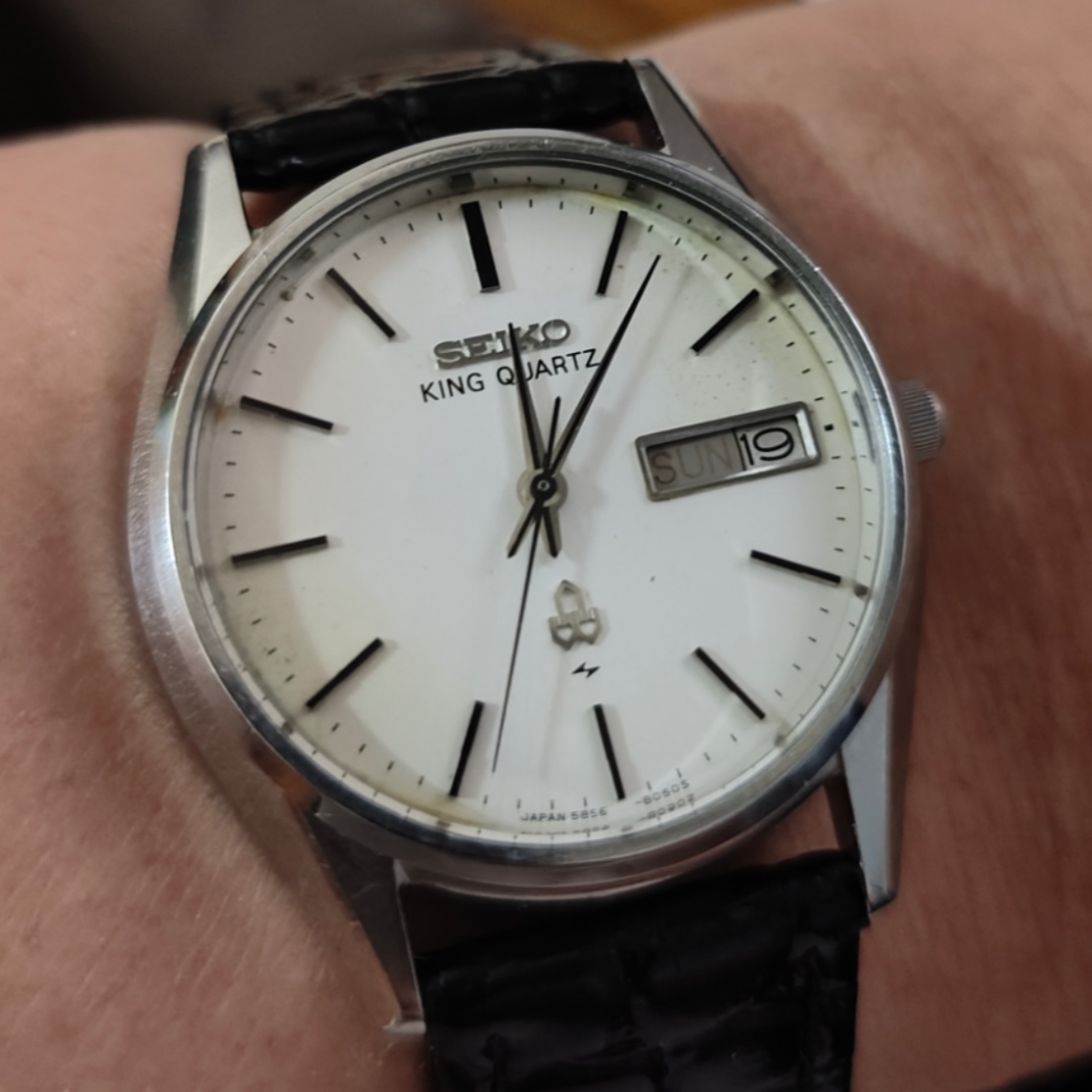
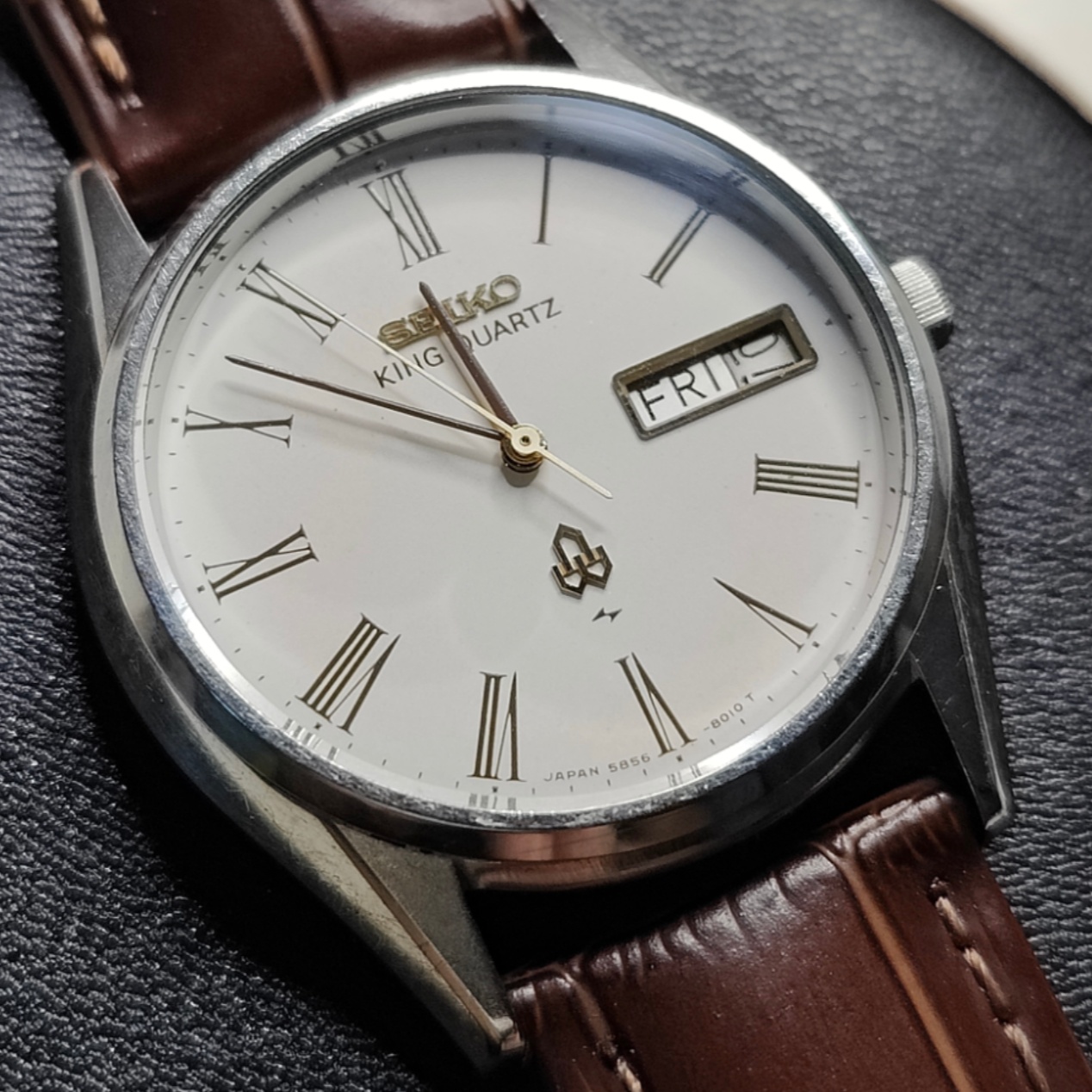
The Seiko 5856 movement on Seiko King Quartz is a fun movement to disassemble and reassemble. Being on the not-quite-so-Grand (heh) King Quartz line, the movement feels higher quality than the typical Type II back in its day with higher jewel counts and less plastic parts.
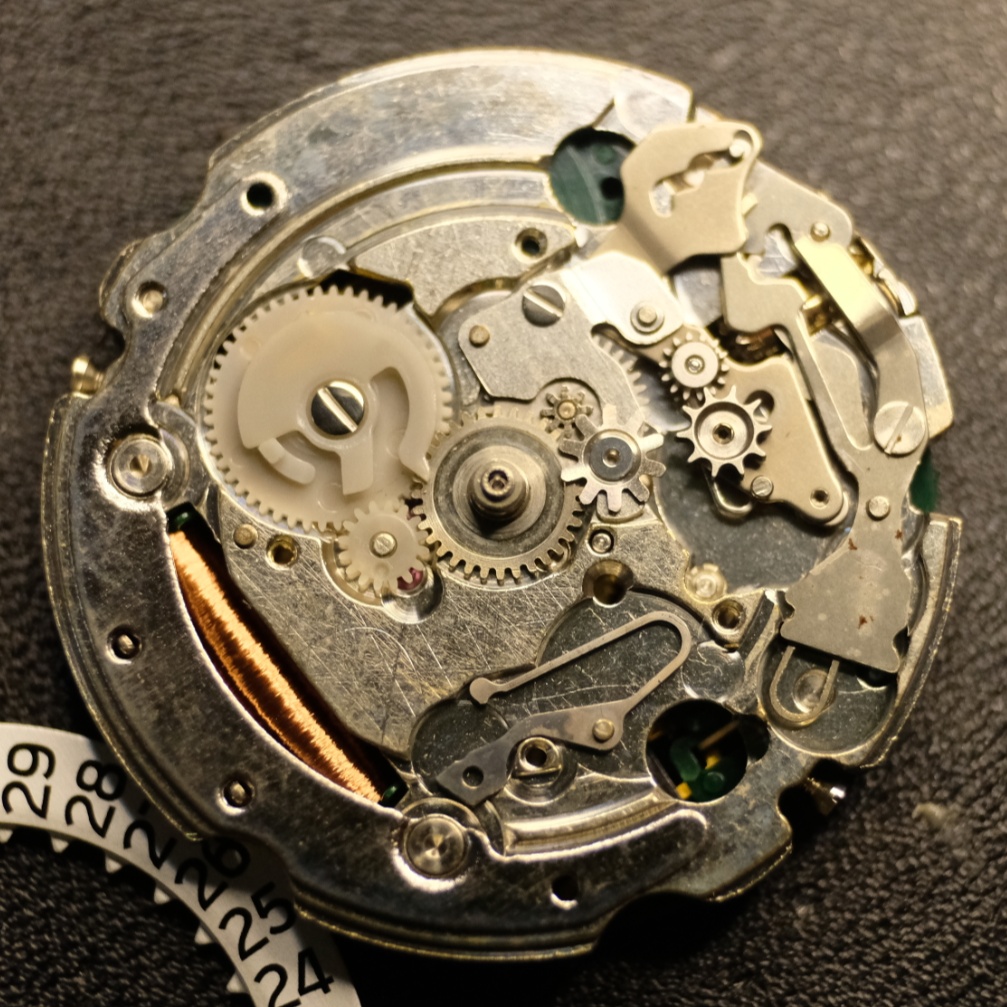
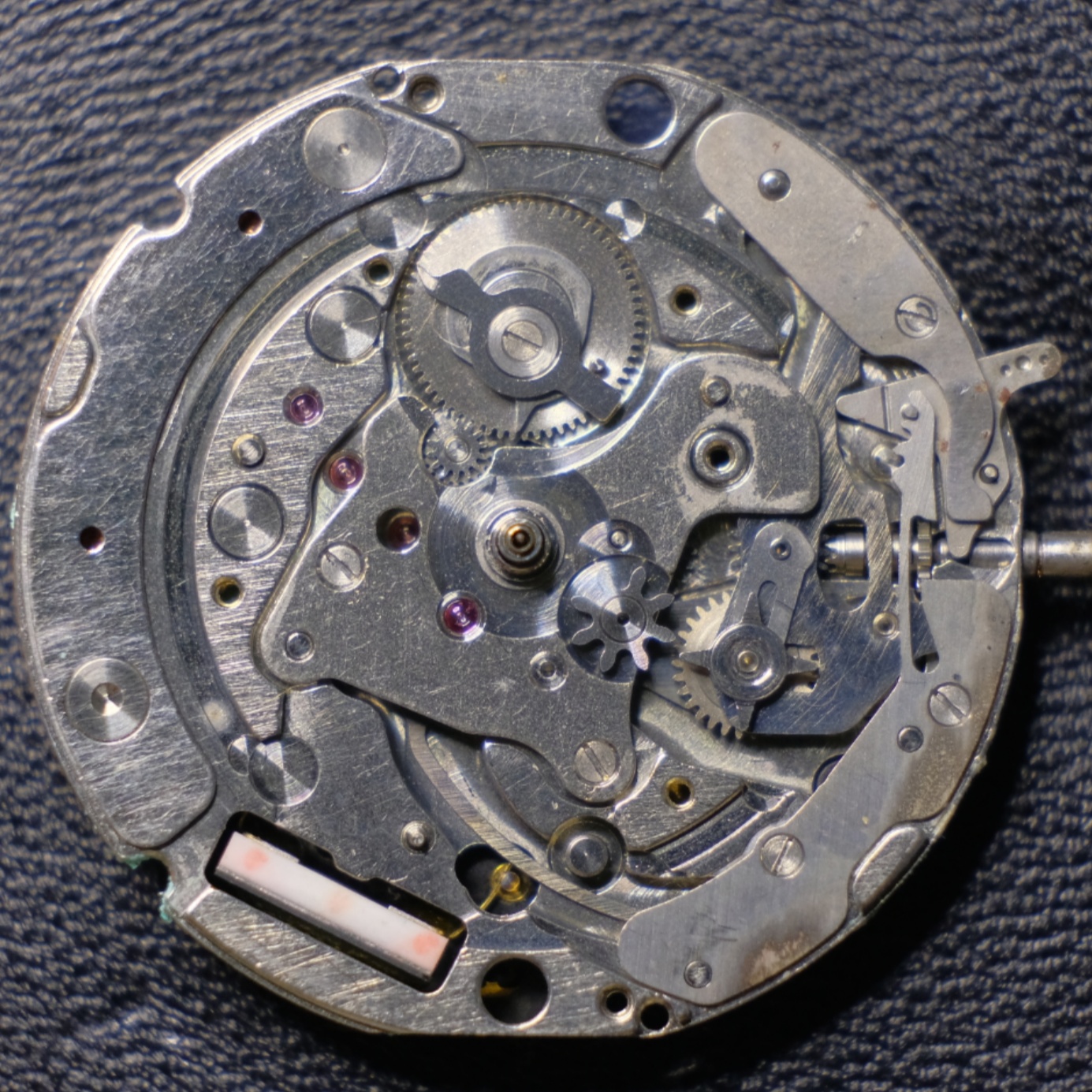
After having serviced 3 of this movement, without much technical information available online (there's a YouTube video), I found 2 design decisions that made this a tricky movement to reassemble: the setting wheel lever complete and the second jumper (names borrowed from similar parts in a 3863).
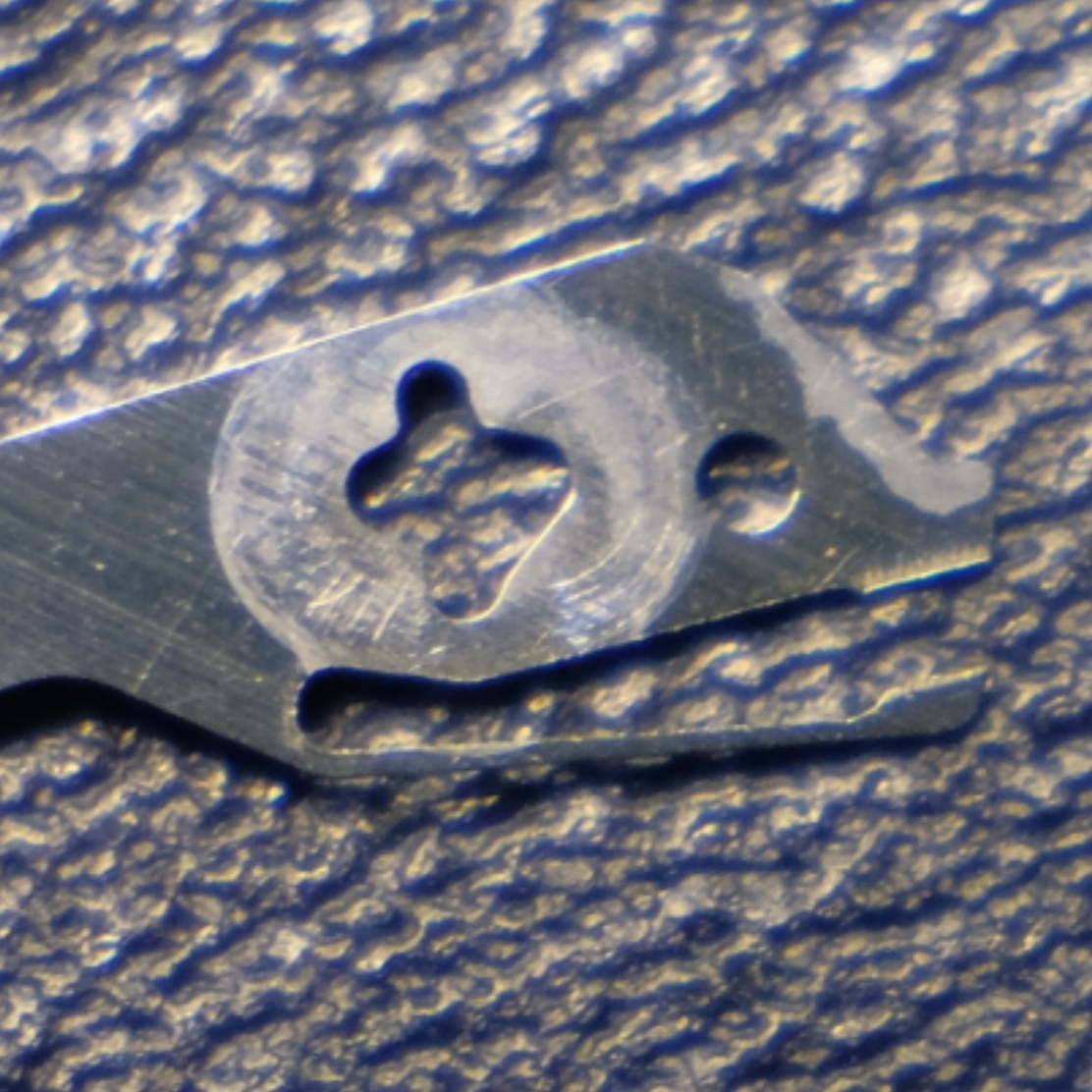
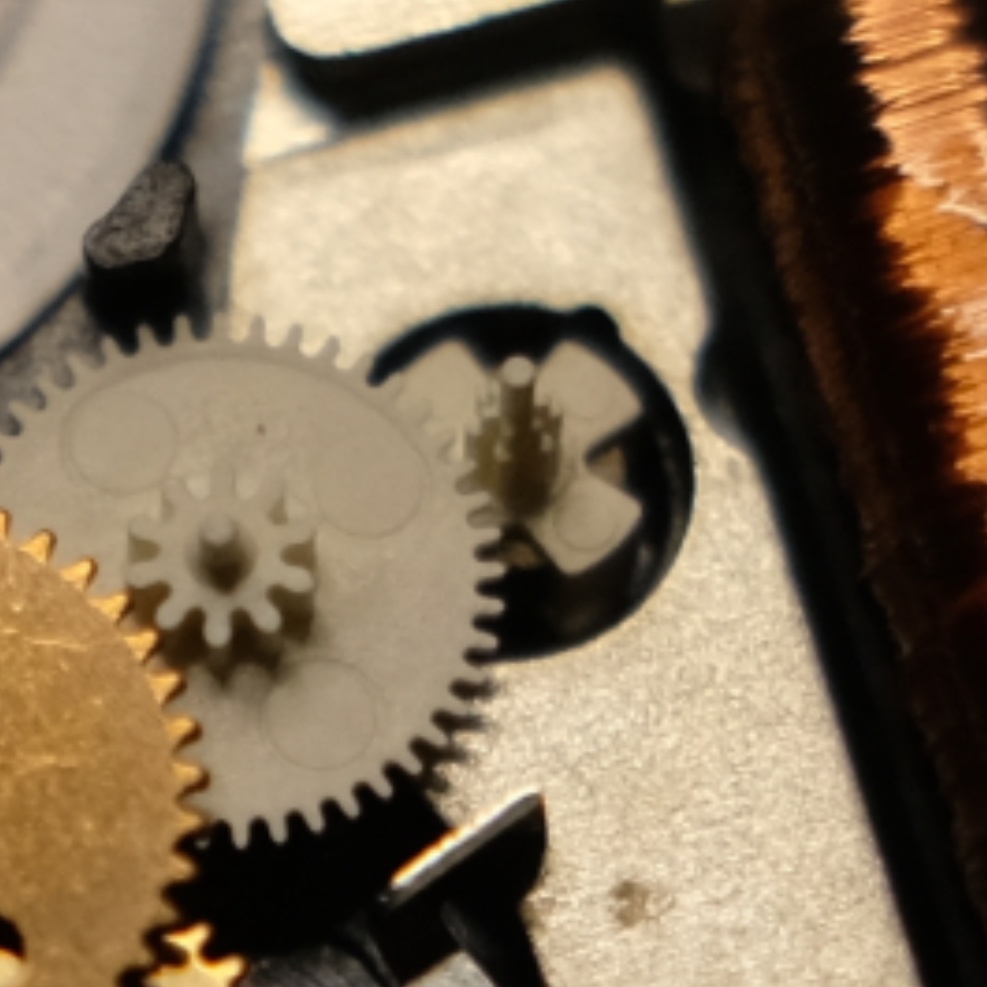
The setting lever complete features a rocking set of wheels which shifts between left and right when quick setting day/date. The wheel would be confined by the + shape opening on the flat piece of yoke spring such that the wheel doesn't move in normal/time setting position.
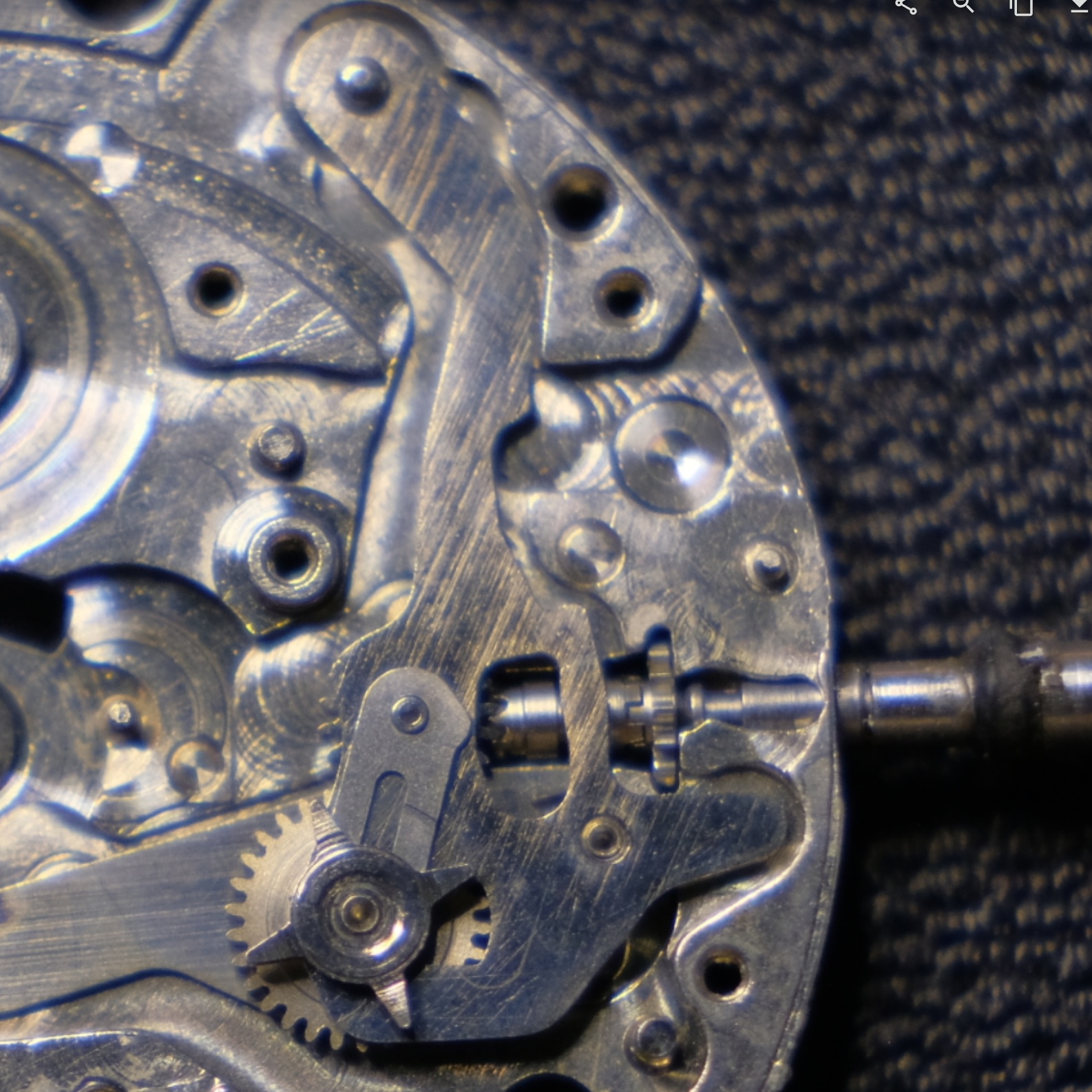
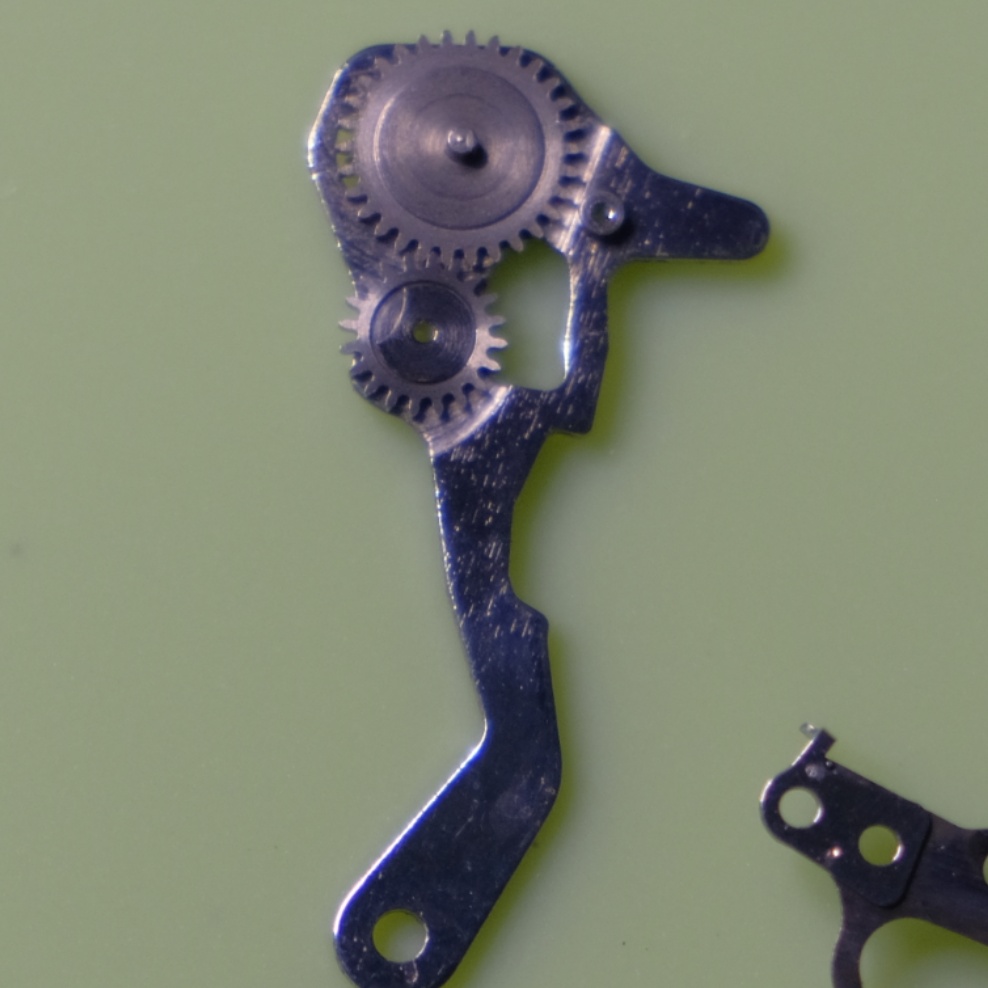
Looking at the bottom of a setting wheel lever complete, there are two pivots. The one on the sliding wheel is obviously for the + shape opening on the yoke spring, but what about the thicker one? One might naturally think it fits onto the hole on the yoke spring.
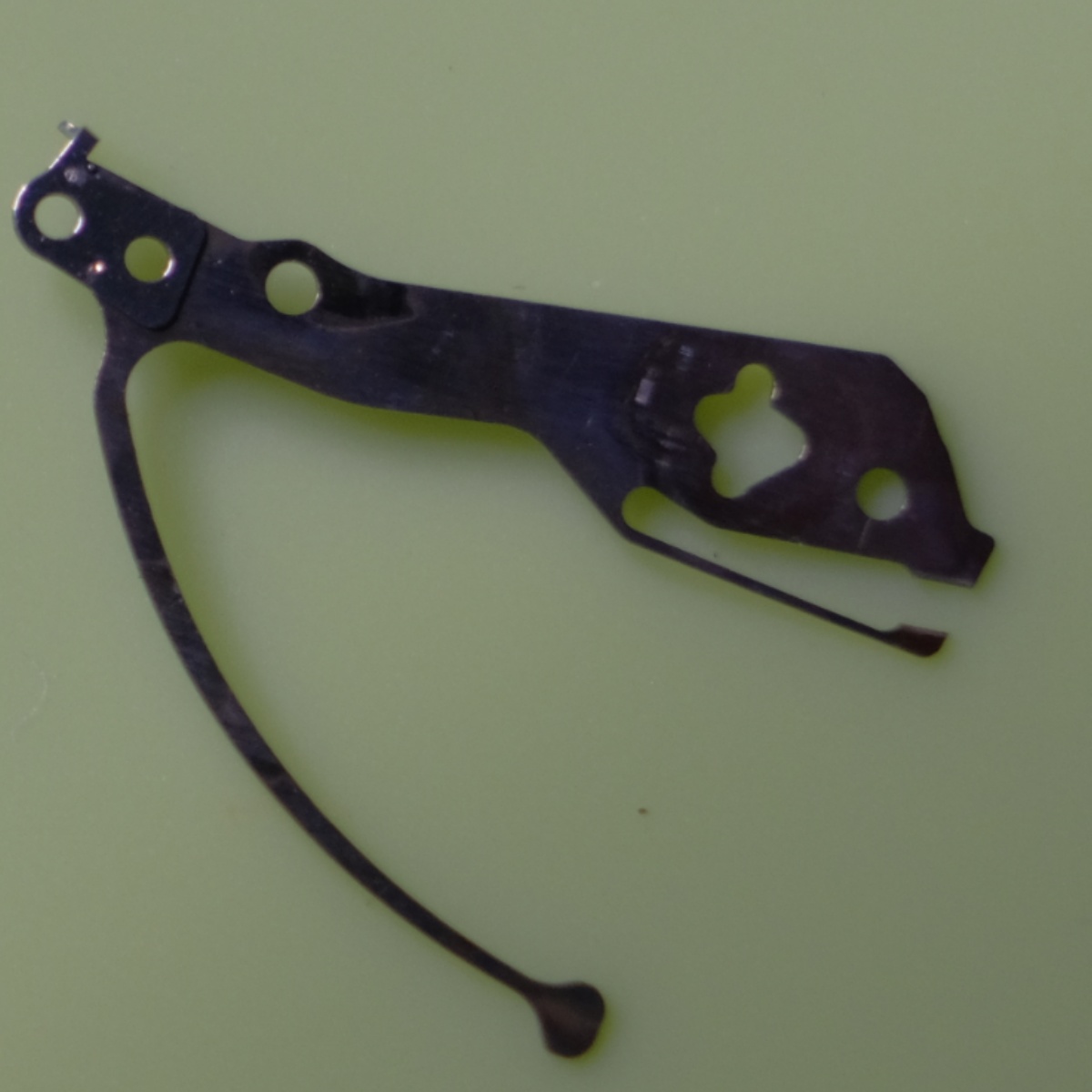
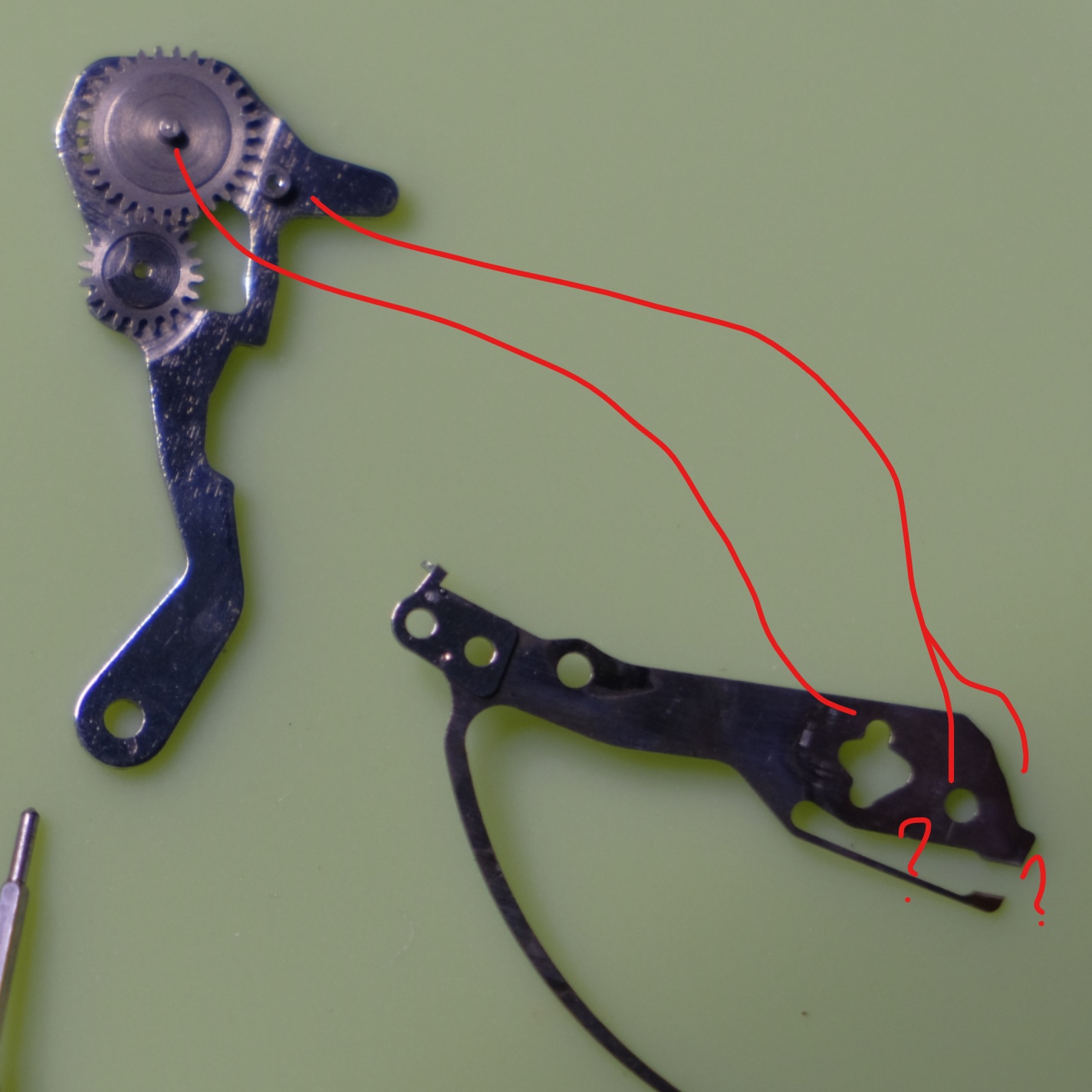
But it is actually to the side of the spring, as made obvious by the oil stain on this yoke spring.
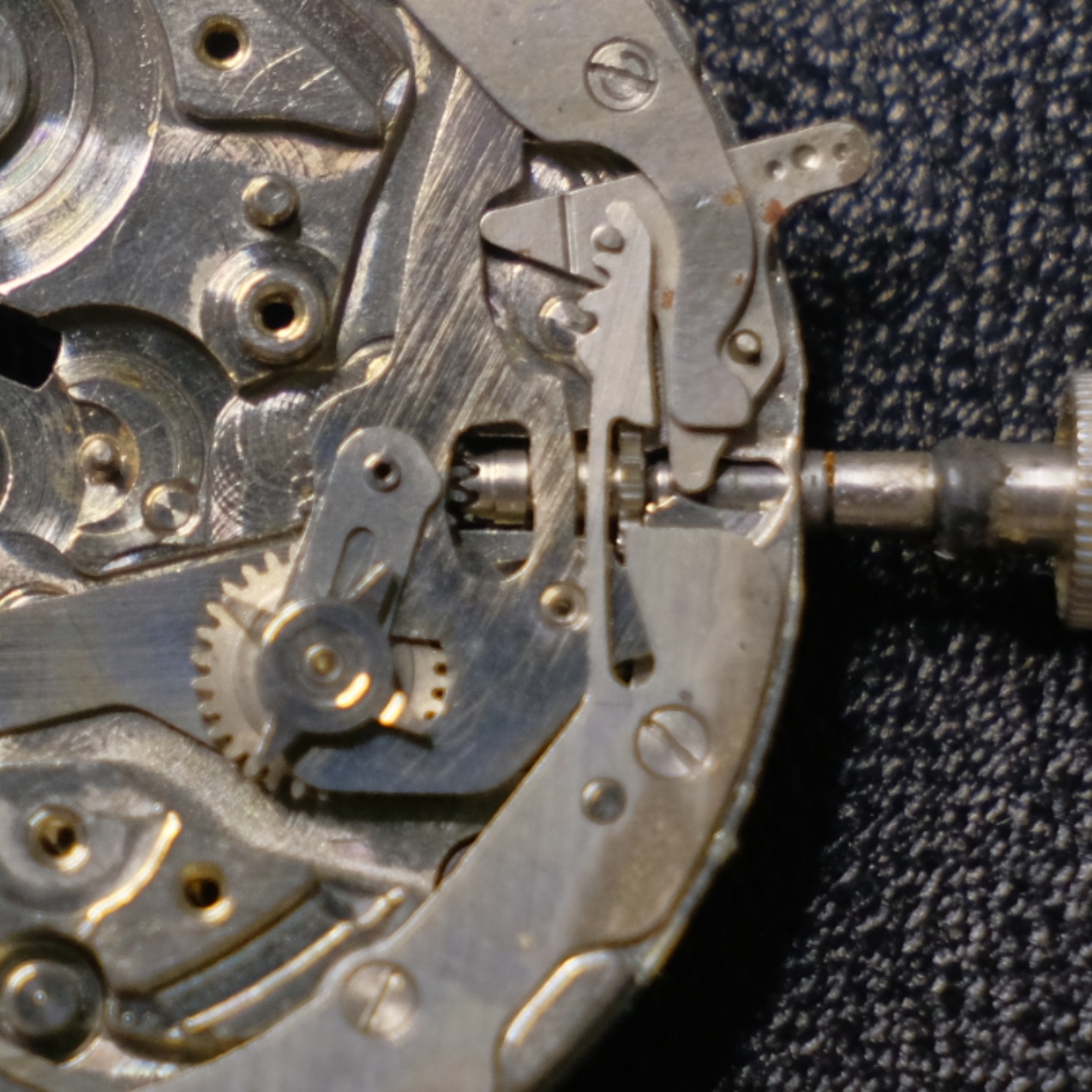
Typically when we assemble a watch the clutch wheel and stem would usually go in first. But on 5856 I found it easier to first assemble the setting wheel lever complete and yoke spring and the rest of the dial side keyless works, before installing the clutch wheel from the back side. Otherwise, any misalignment with the clutch wheel would push the setting wheel lever complete out of alignment.
The second jumper is another problematic design element that has been removed in the later quartz movement designs. Since the stepping motor is essentially stepless when no magnetic force is applied to the rotor, something needs to stop the second hand from wiggling back and forth when the second advances or when the user is violently moving. This exists in 38, 48 and 58 series quartz movements.
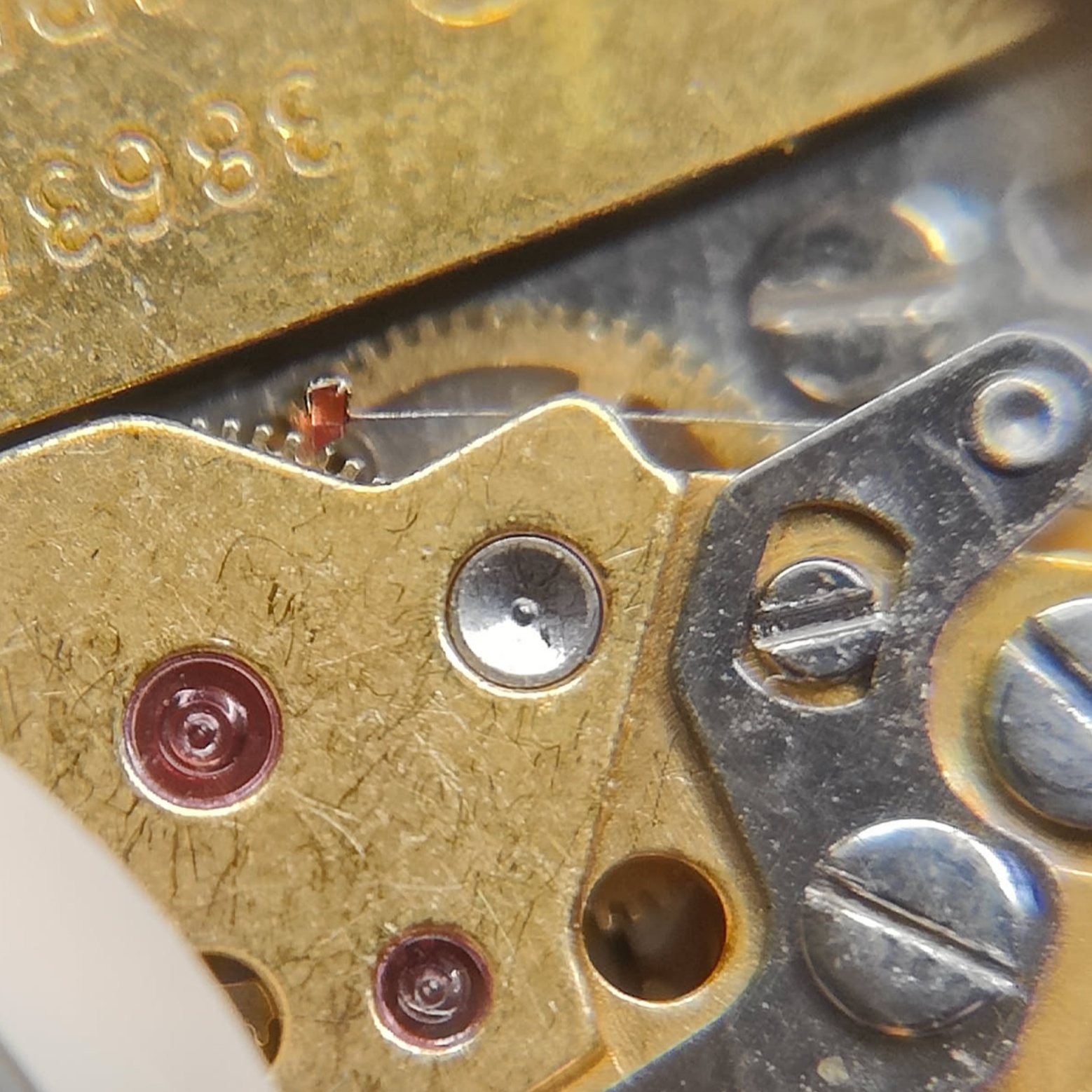
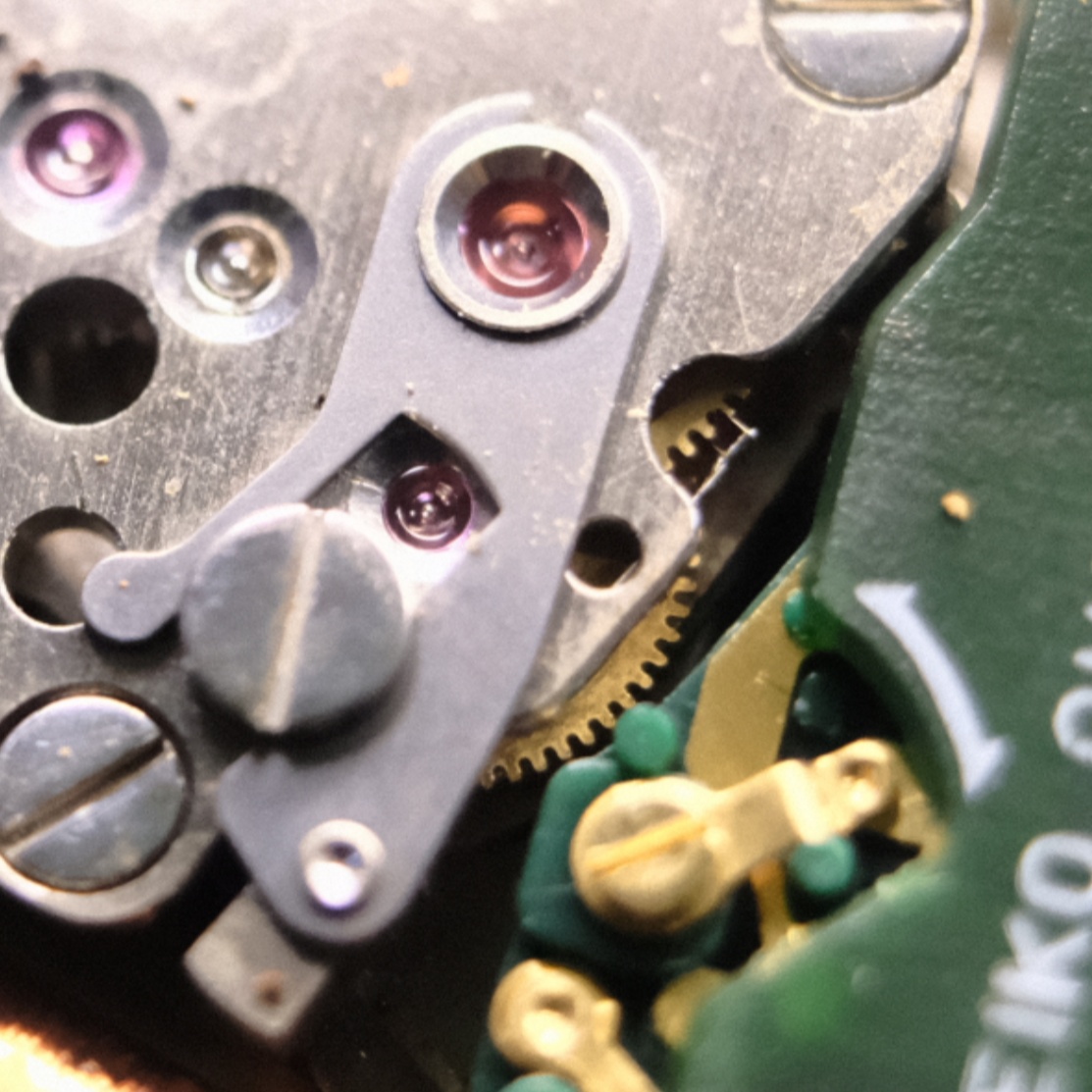
Strangely a modern quartz movement wouldn't have a second jumper, and yet somehow the second hand knows to stop dead right where it should every time it advances. Maybe it's the piece of plastic on top of the rotor.
When properly configured, the second jumper would make a pleasant springy ping when a second is advanced, especially on a 3863. However, it is finicky to adjust both the position of the second jumper plate and the angle of the jumper itself.
38 series documentation is available online to show the correct position where the second jumper head should sit, but not for 48 and 58 series movement.
On a 5856, the jumper would be catching the pinion, and then the groove of the wheel. There are times when I had to readjust the spring tension because I wasn't sure if it was a loose second hand or the wheel being loose. Also, the 5856 plastic second jumper head does wear with time faster than on 38 or 48 series where rubies are used.
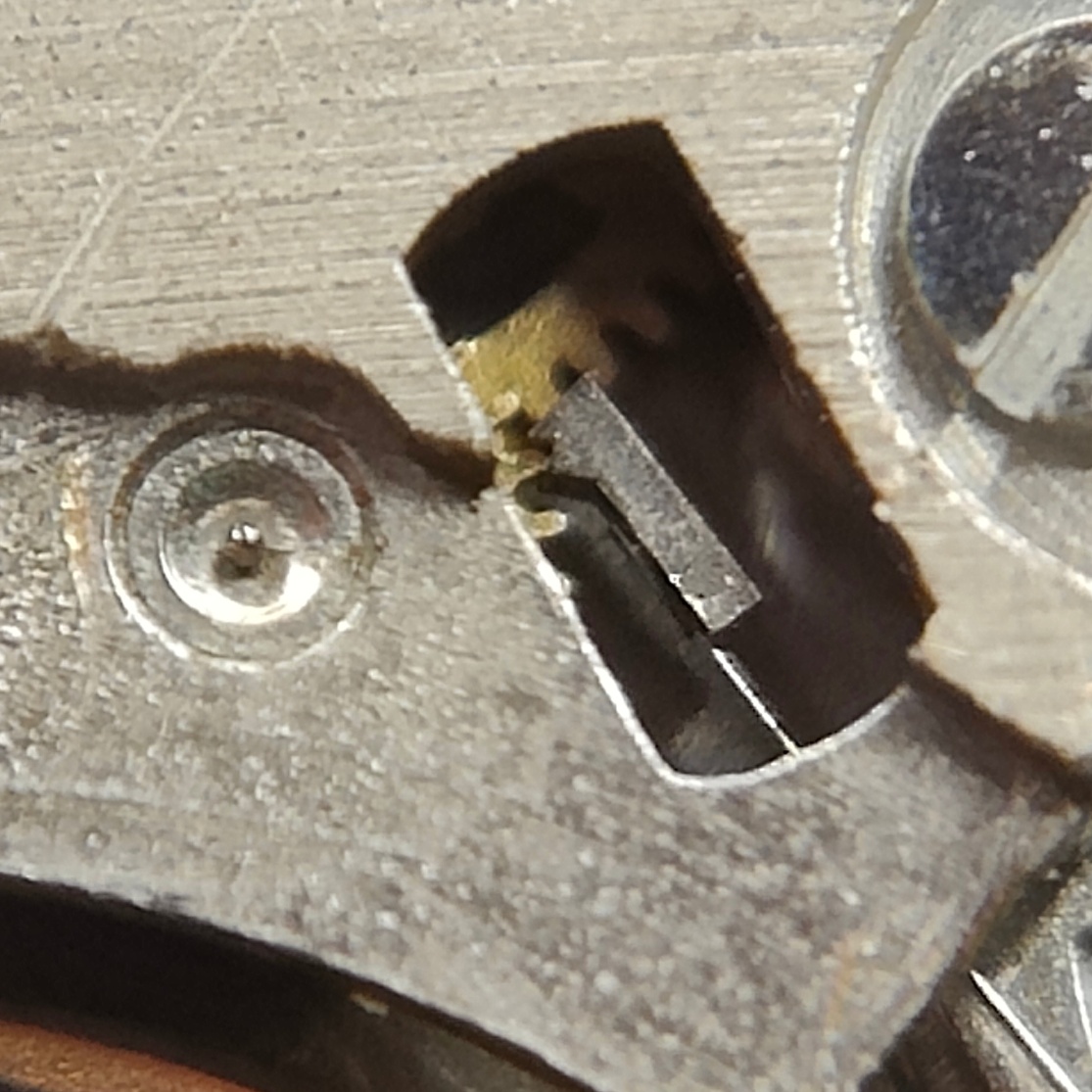
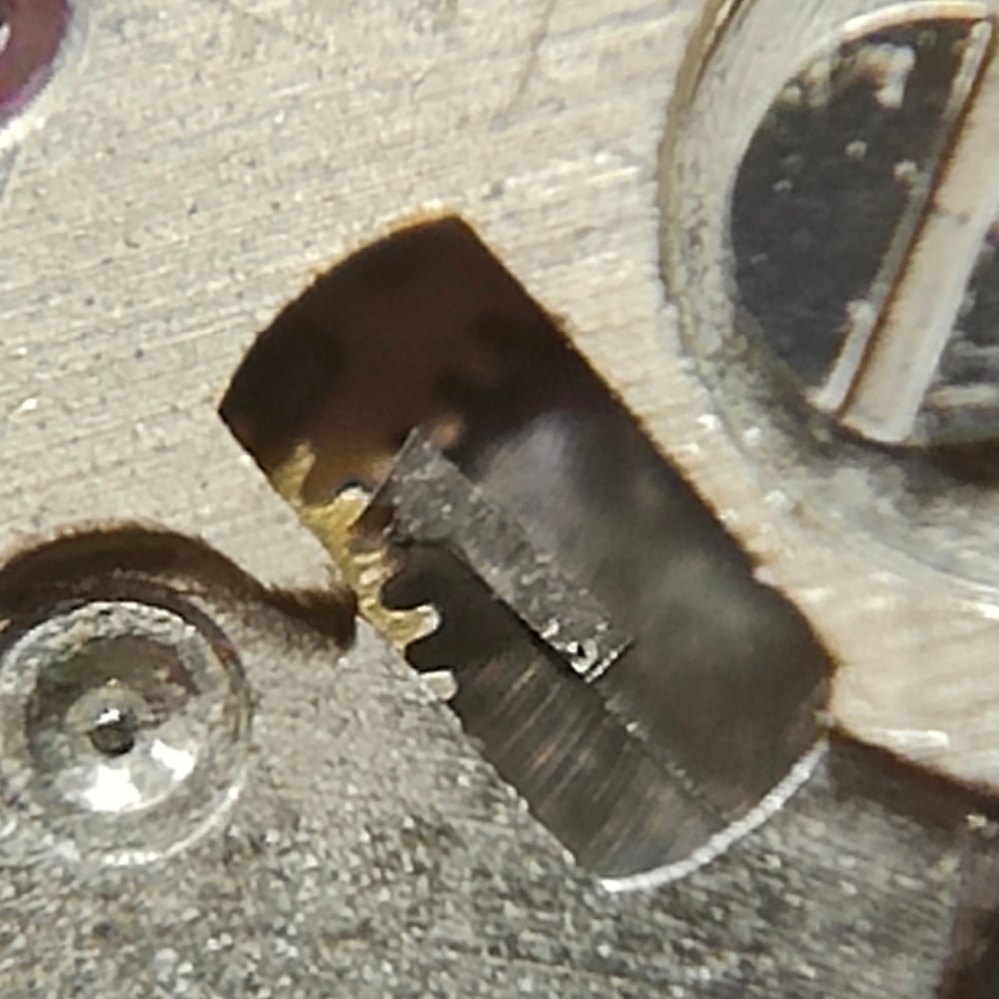
For this particular example of Seiko 5856-8040 I needed to exchange the second jumper from a donor such that the second hand lands right at the second markers. This is also a flaw of the 5856, I'd rather one of the 6 jewel bearings be used on the second jumper head like on a 3863 or 4803 instead of a plastic head that wears out with time.
Other than these two tricky bits, the Seiko 5856 is a nice thin high quality quartz movement sporting 1 second stop/advance feature for minor adjustments without stopping the watch, a feature that's unnecessary and cool.